

Think of your product launch plan as more than just a checklist. It's the strategic blueprint that gets your entire team on the same page, carves out your spot in the market, and maps out every single move from early research to post-launch review. A solid plan ensures everyone, from marketing to sales, tells the same story and pushes for the same, clear goals.
Laying Your Pre-Launch Foundation
I've seen it time and time again: a product's success is often decided weeks, or even months, before it ever sees the light of day. This early phase isn't just about ticking boxes. It's about making sure your assumptions are correct and that there's actually a market waiting for what you've built.
Skipping this foundational work is like building a house on sand. Sure, it might look good at first, but it won't hold up under pressure.
It all kicks off with deep-diving into market and customer research. This means getting past surface-level surveys and having real conversations with potential users. You need to uncover their genuine pain points, not just the ones you assume they have. What are they really trying to accomplish, and where are the current tools letting them down? Nailing this is the first step to crafting a message that actually connects.
Analyze the Competitive Landscape
Once you have a handle on your customer, it's time to size up the competition. This isn't about blindly copying their features. It's about spotting their weaknesses and finding your opening.
- Where is their messaging weak? Maybe they get bogged down in technical jargon instead of talking about real-world benefits.
- Which customer groups do they ignore? You might find a whole niche audience whose needs are being completely overlooked.
- What are their customers complaining about online? Trawling through review sites and forums can be a goldmine for discovering what people hate about existing solutions.
This kind of analysis is how you find your unique positioning. You stop being just another option and become the only logical choice for a specific group of people with a very specific problem.
A classic mistake is getting obsessed with vanity metrics like social media impressions. Instead, be laser-focused on goals that show real business impact.
Set Clear and Measurable Goals
Vague goals like "increase brand awareness" are pretty much useless. Your pre-launch objectives have to be specific, measurable, and tied directly to what the business actually needs to achieve. A good plan forces you to get crystal clear on what success truly looks like.
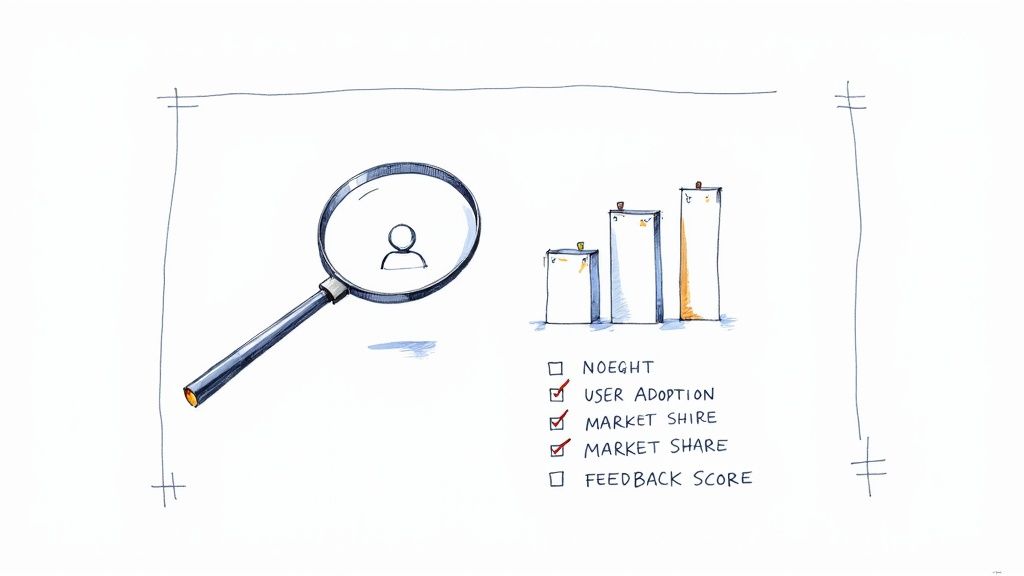
Focus on goals that show real business impact, like user adoption rates, capturing market share in a key vertical, or hitting a specific Net Promoter Score (NPS) within the first 90 days.
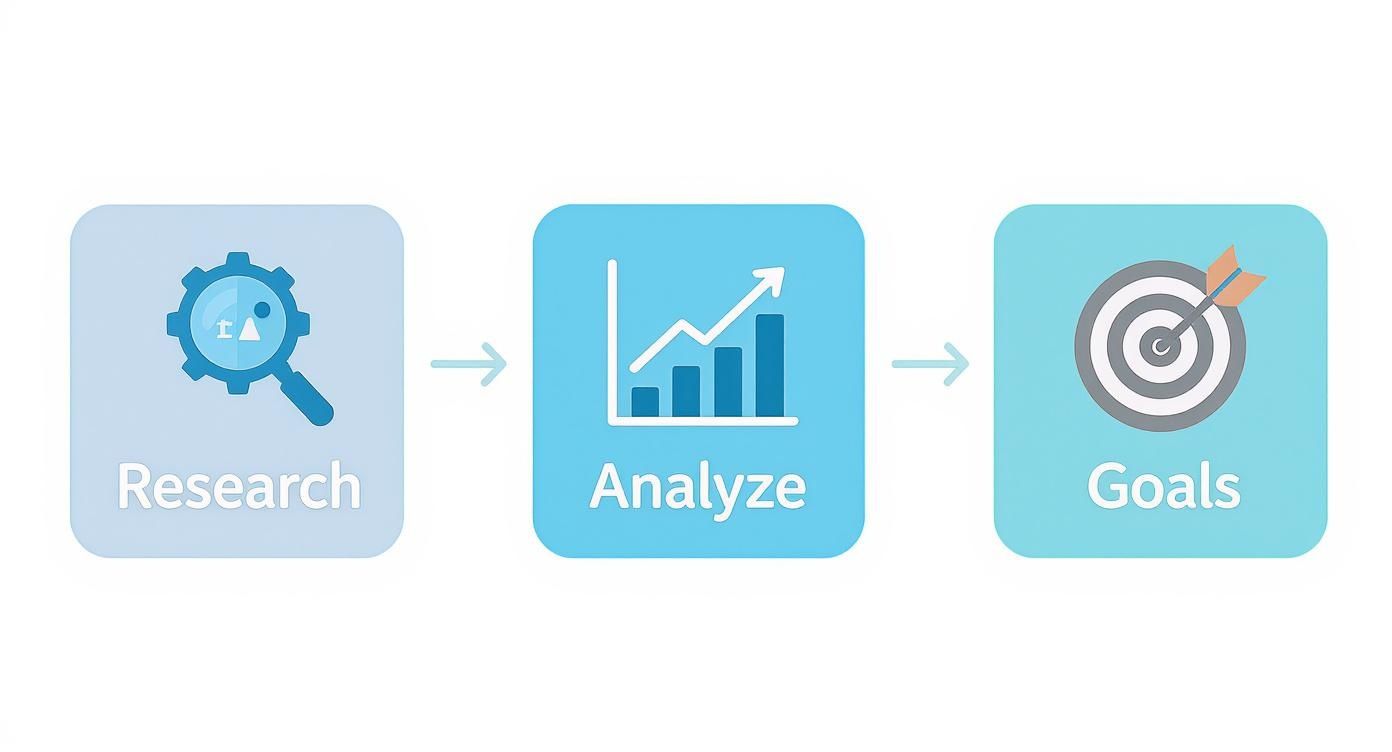
Each step builds directly on the last, making sure your final goals are grounded in what the market is telling you, not just what you're hoping for.
Building a Go-To-Market Strategy That Works
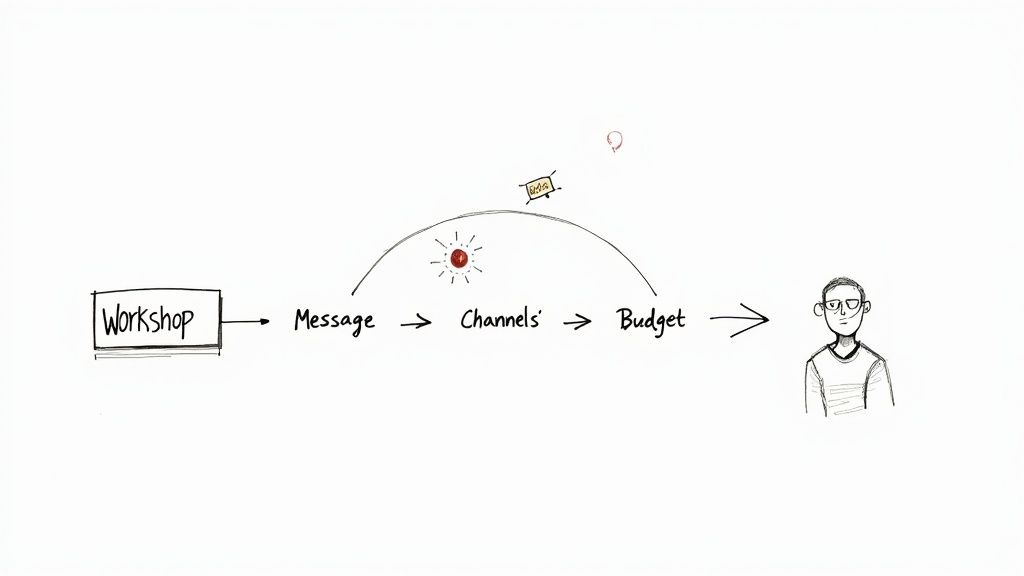
Think of your go-to-market (GTM) strategy as the operational playbook for your entire launch. This is the moment where all that research you've done finally hits the real world, creating the bridge between your product and the people who actually need it. A solid GTM plan isn't about jumping on every new trend. It's about making smart, focused choices.
It all starts with getting your message right. And I don't mean a long list of features or a bunch of technical jargon. Your message needs to hit on an emotional level. What's the core problem you're solving?
For a B2B SaaS tool, that might be something like, "Stop wasting hours on manual reports." For a new consumer gadget, it could be as simple as, "Enjoy perfectly brewed coffee every single morning." The goal is to craft a message that connects so deeply, your product feels like the only solution.
Choosing Your Marketing Channels Wisely
Once you've nailed your message, you have to figure out where to share it. The secret here is to meet your audience where they already hang out, not where you think they should be. It's so easy to spread your budget too thin across a dozen different platforms. Don't. Pick just two or three channels where you know you can make a real splash.
Here's what that could look like:
- For a B2B SaaS tool: Your people are probably on LinkedIn, lurking in niche industry forums, or following specific thought leaders on X (formerly Twitter). This is where content marketing (think in-depth blog posts or live webinars) really shines.
- For a D2C gadget: You need to be visual. Platforms like Instagram, TikTok, and YouTube are your best friends for showing off a physical product. Working with influencers who have a genuine, established connection with your target audience can be a game-changer here.
This focused approach helps your marketing build momentum instead of just adding to the noise.
A huge mistake teams make is treating customer acquisition and retention as two separate things during a launch. Your GTM plan has to think about both from day one.
Mapping Out Content and Budget
Finally, it's time to plan your content and assign a budget. This isn't just a to-do list of assets to create. You're building a promotional timeline, a series of "beats" designed to build excitement before, during, and after launch day.
Here's a sample content cadence:
- 4 Weeks Out: Announce the product is coming with a blog post explaining the "why" behind it.
- 2 Weeks Out: Start sharing behind-the-scenes videos or sneak peeks on social media.
- Launch Week: Drop a high-value guide, host a live demo webinar, and fire off your targeted launch emails.
- Post-Launch: Immediately start showcasing early customer stories, testimonials, and case studies.
Your budget should directly fuel these activities. Put your money where you expect the highest return, whether that's a specific channel or a particular type of content. Remember, a well-thought-out GTM plan isn't just a document. It's your roadmap to making a memorable entrance. Nailing your customer acquisition and retention strategies early on is what turns a good launch into a great business. Learn more about how to balance customer acquisition vs retention to set yourself up for lasting success.
Crafting the Content and Assets for Your Launch
Think of your content as the engine that powers your launch. Even the most brilliant product can flop if the content surrounding it is dull or forgettable. The assets you create (the blog posts, videos, and web pages) are what your audience actually sees and engages with. This is where your planning turns into something real and tangible.
The game has changed. Recent data shows just how much launch strategies have evolved. We're seeing 67% of product launches lean heavily on video, micro-influencer collaborations have shot up by 78%, and 56% of SaaS launches now feature interactive demos. It's a clear signal that people crave more engaging, hands-on experiences. Meanwhile, old-school tactics like generic email blasts are losing their punch.
The Content That Actually Gets Results
To make a splash, you need a smart mix of assets that not only inform but also build genuine trust with your audience. Generic, one-size-fits-all content just won't do the job anymore. The goal is to create pieces that solve real problems, positioning your product as the clear, go-to solution.
Here's what you should focus on creating:
- A High-Converting Landing Page: This is mission control for your launch. It needs to grab attention, clearly state the problem you solve, and have one crystal-clear call-to-action. No confusion, just a direct path to what you want them to do next.
- Authentic, Short-Form Video: Ditch the polished corporate feel. Think quick demos, behind-the-scenes looks, or customer stories tailor-made for platforms like TikTok and Instagram Reels. People connect with people, not brands.
- Problem-Solving Blog Posts: Don't just write about your features. Write about your customers' pain points. Show them you understand their world and how your product makes their life better in a practical way.
- Interactive Demos: For software, there's no better salesperson than the product itself. An interactive demo lets potential users get that "aha!" moment for themselves, no high-pressure sales call needed.
Your email sequence should feel like a helpful conversation, not a megaphone. Start by educating your audience about the problem, then introduce your product as the solution.
A Modern Take on Email and Influencers
Sending the same generic message to your entire email list is a relic of the past. That's a surefire way to get ignored or, worse, rack up unsubscribes. Your launch emails need to be smarter. They need to be segmented and packed with value.
This approach builds a natural sense of anticipation and makes sure you're sending the right message to the right people. If you need a tool for this, our guide on what Mailchimp is and how it works can help you set up targeted campaigns.
Your influencer strategy needs a similar rethink. Forget spending your budget on mega-influencers with millions of passive followers. The real power is with micro-influencers who command smaller, but incredibly engaged and loyal audiences in your niche. An endorsement from them feels less like a paid ad and more like a trusted recommendation from a friend. That's exactly the kind of social proof that drives early adoption.
Executing A Smooth Launch Day
When launch day finally rolls around, it's less about grand gestures and more about steady, confident execution. You've poured weeks into your product launch plan sample. Now it's time to let it guide every move.
Before the first user clicks "Sign Up," gather your team for a quick alignment. Make sure everyone knows their roles and where to find critical information. A dedicated Slack channel or another real-time chat room keeps urgent updates from getting buried.
Your Launch Day Command Center
Picture this as your mission control. You're not just staring at a traffic dashboard. You're tracking the signals that truly matter.
Monitor these in real time:
- Sign-Ups Flow: Are registrations matching your projections?
- Onboarding Steps: Is the first key action being completed smoothly?
- Error Rates: Any spike deserves an instant investigation.
Feedback at warp speed is pure gold. Catch those first impressions before they vanish.
Set up a simple in-app survey or a direct support line to capture user reactions. Acting on this feedback right away not only fixes surprises but also builds trust with your earliest adopters.
The Real Work Starts Post-Launch
Once the press release hits inboxes, the volume of insights surges. That's where the heavy lifting begins.
Here's a practical checklist to keep your team on track:
- Technical Monitoring: Watch server load, application performance, and error logs. You want zero surprises when the traffic spikes.
- Team Check-Ins: A 15-minute sync every few hours keeps everyone updated on trends and troubleshooting.
- Customer Feedback Channels: Scan social media mentions, support tickets, and feedback forms. A quick acknowledgment goes a long way, even if the solution comes later.
- KPI Tracking: Keep an eye on your primary launch KPIs (new sign-ups, activation rates, initial sales). Those numbers tell you where to pivot.
Stay nimble. Small tweaks based on real-time data can turn a good launch into a great one. This is the foundation of long-term growth, not just a one-day celebration.
Analyzing Post-Launch Data to Drive Growth

It's easy to feel like launch day is the finish line. You pop the champagne, high-five the team, and breathe a sigh of relief. But in reality, the launch is just the starting gun. The real work (building long-term, sustainable growth) is just getting started.
The initial buzz and traffic will fade. Your job now is to turn that early flood of data into a clear roadmap for what comes next.
This is where so many launches fall flat. A staggering 80-90% of new products fail within 18 months, often because they lose touch with what customers actually want. This is why diving into your post-launch data isn't optional. It's essential.
Conducting a Productive Retrospective
Your first move should be to get a post-launch retrospective on the calendar. This isn't about pointing fingers. It's about getting everyone in a room to talk honestly about what happened.
The whole point here is to create a safe space for open, unfiltered feedback. You want engineers, marketers, and support specialists all sharing what they saw from their unique vantage point.
To keep the conversation on track, I like to use a simple framework:
- What went well? Pinpoint the wins, no matter how small. Maybe a specific ad campaign blew past its goals, or the servers handled the traffic spike without a hiccup. Celebrate what worked.
- What could be improved? Get real about the roadblocks. Was the support team swamped with questions about a particular feature? That's a sign your onboarding might have a hole in it.
- What did we learn? This is the most important question. The goal is to boil everything down into concrete lessons that will make your next launch (or even just your next feature update) even better.
I've learned over the years that the most valuable feedback often comes from the quietest person in the room. Make a point to actively ask every single person for their thoughts.
Diving Deep into the Data
Team feedback is crucial, but you also need to get your hands dirty with the numbers. This is where you find out if your initial assumptions were on the money or way off base. You're looking for the story the data is telling.
I recommend focusing your energy on three key areas:
-
Sales and Conversion Data: Don't just look at the total sales number. Dig deeper. Which customer segments are converting best? Which marketing messages are actually resonating? The answers are in the details.
-
User Behavior Analytics: Where are people clicking? What features are they using most? And, just as important, where are they getting stuck and bailing? Finding and fixing these friction points should be your top priority. If you need a powerful tool for this, it's worth taking a look at different product analytics platforms to see what they offer.
-
Support Tickets and Feedback: Your support inbox is an absolute goldmine of user insights. Start categorizing tickets to see if the same problems or feature requests keep popping up. This is your most engaged audience telling you exactly what they want you to build next.
By getting into this rhythm of analysis, your product launch plan sample stops being a static document and becomes a dynamic playbook for growth. The data you collect in the first few weeks after launch will give you the clearest possible direction for your roadmap, ensuring you're building something people will love and use for years to come.
Got Questions About Your Product Launch Plan?
Even with the perfect template, you're going to have questions. It's totally normal. Every single launch comes with its own set of curveballs, whether you're dealing with a shoestring budget or a ridiculously tight deadline. Let's dig into some of the most common hurdles I see teams facing.
A lot of teams, especially early-stage startups, get hung up on their budget. They worry their plan is way too big for their wallet. Here's the good news: a successful launch has very little to do with how much you spend and everything to do with how you spend it.
Instead of trying to fund a massive, splashy campaign, get creative with high-impact, low-cost tactics. It's less about buying expensive ads and more about creating real connections.
Here's how you can make a big splash with a small budget:
- Generate organic buzz. Find your people. Go hang out in niche subreddits or specific LinkedIn groups where your ideal customers are already talking about their problems.
- Lean on your early adopters. Your first few happy customers can be your most powerful marketing engine. Encourage them to leave reviews and share their stories.
- Go deep with your content. Don't try to create a hundred different things. Focus on one or two incredibly valuable resources, like a comprehensive guide or a practical webinar, that solves a real pain point for your audience.
This scrappy, focused approach forces you to be resourceful, and honestly, it often builds a much stronger, more authentic bond with your first wave of users.
So, What's a Realistic Launch Timeline?
The other big question I always get is about timing. How long should this all take? A good timeline isn't about counting the weeks. It's about hitting your milestones. The biggest mistake you can make is rushing the foundational work. It's a surefire way to have a launch that falls flat.
I generally see timelines break down into a few key phases:
- The Foundation (4-6 weeks): This is all about your homework (market research, competitor deep dives, and setting clear goals). Whatever you do, don't skimp on this part. Everything else you build rests on it.
- Asset Creation (3-4 weeks): Time to get to work. This is when you're actually building the landing pages, writing email sequences, and getting your social media content ready to go.
- Pre-Launch Buzz (1-2 weeks): Now you can start teasing what's coming. This is your chance to warm up your audience and get them excited for launch day.
- Launch & Beyond (Ongoing): The week of the launch will be a whirlwind, but the real work of listening, learning, and iterating continues for weeks and months after.
For most products, a 2-3 month timeline from the start of serious planning to launch day is a solid, realistic goal to aim for.
What Are the Most Important Metrics to Track After Launch?
Once your product is out in the wild, it's easy to get lost in a sea of data. My advice for the first 30 days? Tune out the vanity metrics like social media impressions and focus on the numbers that tell you if your product actually has a pulse.
The most critical metric right out of the gate isn't sign-ups. It's user activation.
An "activated" user is someone who has not only signed up but has also completed the key actions to experience that first "aha!" moment. This is a far better predictor of long-term success than just a raw sign-up count.
To really understand if you're on the right track, keep a close eye on these essentials:
- Activation Rate: What percentage of people who sign up actually complete your onboarding and start using the core features?
- User Feedback Score: You don't need anything fancy. A simple in-app survey to get an early Net Promoter Score (NPS) or Customer Satisfaction (CSAT) score can be incredibly revealing.
- Initial Retention: Are people coming back the next day? Or the next week? This tells you if your product delivers immediate value.
These metrics give you an honest look at how your launch is really doing. They provide the insights you need to make smart pivots and build momentum for the long haul.
Ready to turn your launch sign-ups into activated users? At UserBoost, we specialize in turning those initial sign-ups into fully activated, engaged users. Our platform automatically figures out where people get stuck in your onboarding and sends the right nudge at the right time to guide them toward success. See how UserBoost can improve your post-launch metrics →
Share this article